

Blog

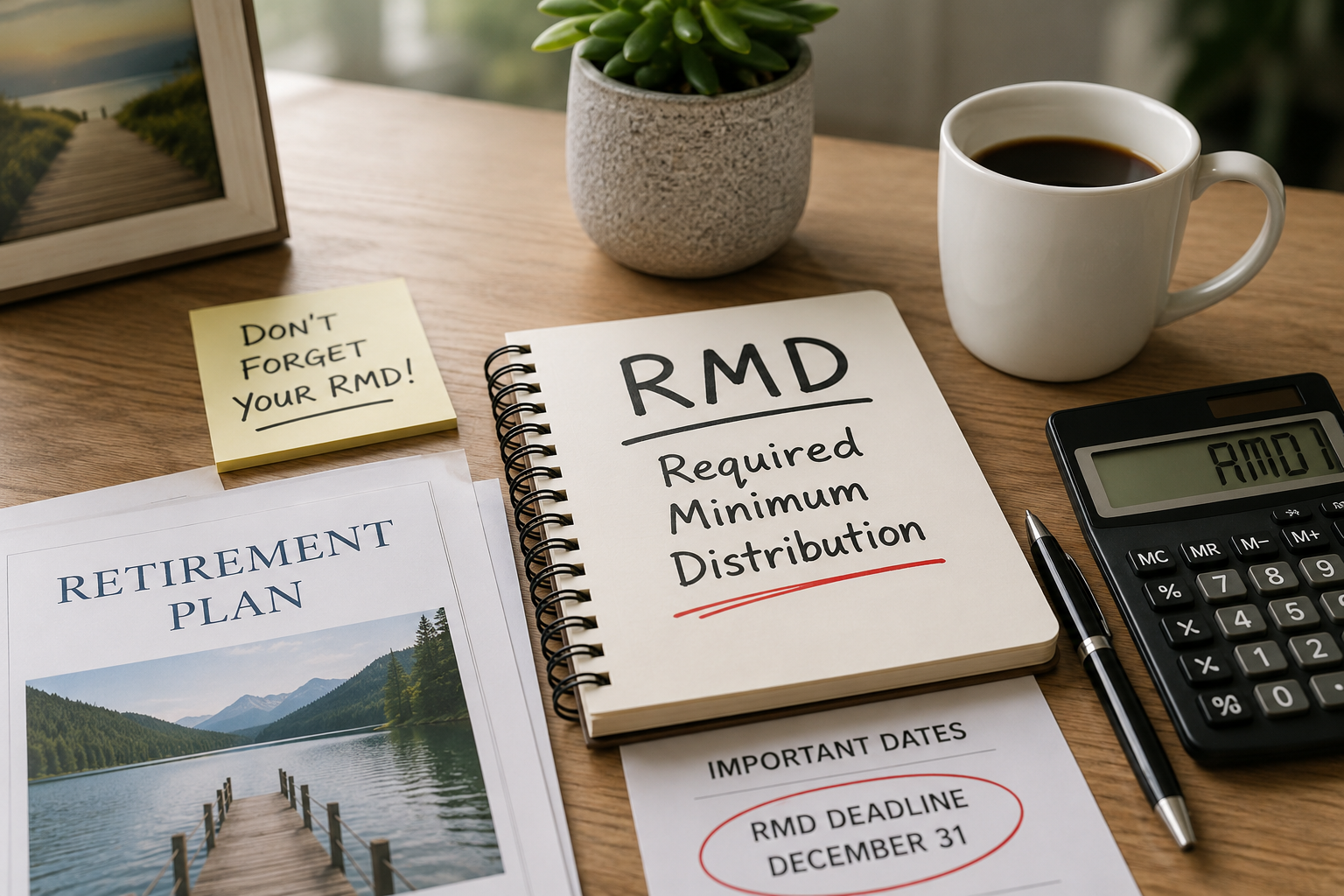
What Happens If You Miss an RMD?
For retirees with traditional IRAs and other tax-deferred retirement accounts, Required Minimum Distributions (RMDs) are an important part of retirement income planning. Yet every year, some retirees accidentally miss all or part of their required distribution.
Whether due to confusion about the rules, multiple retirement accounts, or simple oversight, missing an RMD can have consequences. Fortunately, the IRS has become more forgiving in recent years, and there are steps retirees can take to correct the mistake.
What Is an RMD?
A Required Minimum Distribution (RMD) is the minimum amount that must be withdrawn each year from certain retirement accounts once you reach the applicable age.
RMDs generally apply to:
- Traditional IRAs
- SEP IRAs
- SIMPLE IRAs
- Most employer-sponsored retirement plans, such as 401(k)s and 403(b)s
The purpose of the rule is straightforward: retirement accounts receive tax advantages while funds remain invested, but eventually the IRS wants those dollars distributed and taxed.
The age at which RMDs begin depends on your birth year and current IRS regulations.
What Happens If You Miss Your RMD?
If you fail to withdraw the full required amount by the applicable deadline, the IRS may assess an excise tax on the amount that was not distributed.
Historically, the penalty was one of the harshest in the tax code, equal to 50% of the amount that should have been withdrawn.
Recent legislation reduced the penalty significantly. Today, the excise tax is generally 25% of the missed amount and may be reduced further to 10% if the error is corrected within a specified timeframe.
While the penalties are less severe than they once were, they can still be costly.
For example, if a retiree was required to withdraw $20,000 but only withdrew $10,000, the missed amount would be $10,000. Depending on how quickly the mistake is corrected, a penalty could still apply.
The Good News: Mistakes Can Often Be Corrected
Missing an RMD does not necessarily mean a retiree will face the full penalty.
The IRS has historically shown a willingness to provide relief when taxpayers:
- Correct the missed distribution promptly
- File the appropriate tax forms
- Demonstrate that the mistake was reasonable
- Take steps to prevent future errors
If an RMD is missed, it is generally advisable to address the issue as soon as possible rather than waiting until the next tax filing season.
The sooner the correction is made, the more options may be available.
Why RMD Mistakes Happen
Many retirees assume RMD errors occur because people forget to take distributions altogether. While that certainly happens, there are several other common causes.
Multiple Retirement Accounts
Retirees often accumulate retirement accounts from multiple employers over their working years.
Keeping track of several IRAs, 401(k)s, or inherited accounts can increase the likelihood of overlooking a required withdrawal.
Changes in Custodians or Advisors
Account transfers between financial institutions can occasionally create confusion about who is responsible for calculating or processing the distribution.
Inherited IRA Rules
Beneficiaries often face different distribution requirements than original account owners.
Because inherited IRA rules have changed several times in recent years, mistakes are not uncommon.
Incorrect Assumptions
Some retirees mistakenly believe that taking withdrawals from one account automatically satisfies requirements for all retirement accounts.
In reality, RMD aggregation rules can be complicated and vary depending on account type.
Prevention Is Better Than Correction
The easiest way to avoid RMD penalties is to establish a system before distributions are due.
Many retirees benefit from:
- Scheduling annual RMD reviews
- Setting up automatic distributions
- Consolidating retirement accounts where appropriate
- Reviewing inherited account requirements carefully
- Coordinating distributions with tax planning strategies
RMDs should not simply be viewed as a compliance requirement. They can also play an important role in retirement income planning and tax management.
RMD Planning Can Impact More Than Taxes
The amount withdrawn from retirement accounts may affect several areas of a retiree's financial life, including:
- Federal income taxes
- State income taxes
- Medicare IRMAA surcharges
- Social Security taxation
- Cash flow planning
- Legacy and estate planning goals
Because of these interconnected factors, many retirees find it beneficial to incorporate RMD planning into their broader retirement strategy rather than treating it as a once-a-year task.
The Bottom Line
Missing an RMD can result in penalties, but it is often a fixable problem when addressed promptly.
More importantly, understanding your distribution requirements and developing a proactive withdrawal strategy can help reduce surprises, avoid unnecessary penalties, and create greater confidence throughout retirement.
Retirement planning is about more than accumulating assets—it is also about managing them efficiently once retirement begins.
If you have questions about Required Minimum Distributions, retirement income planning, or tax-efficient withdrawal strategies, the team at Towerto Private Wealth is here to help.
We work with retirees and those approaching retirement to help coordinate investment management, retirement income planning, and tax strategies designed to support long-term financial confidence.
Securities offered through LPL Financial, Member FINRA/SIPC. Investment advice offered through TOP Private Wealth, a registered investment advisor and separate entity from LPL Financial.
Contact Us
Towerto Private Wealth


Form ADV Parts 2A & B | Privacy Policy | Terms and Conditions | Form CRS
TOP Private Wealth LLC is an investment adviser registered with the U.S. Securities and Exchange Commission ("SEC"). Registration does not imply a certain level of skill or training. The firm is principally located in the State of Connecticut.
Securities offered through LPL Financial, Member FINRA/SIPC.
Investment advice offered through TOP Private Wealth, a registered investment advisor and separate entity from LPL Financial.LPL Financial